

To build an AI-Ready website that ranks high and gets cited by engines like ChatGPT, Gemini, Perplexity, Claude, Copilot and Google AI Overviews, you must focus on clean brand entity signals, direct answer content, and rock-solid technical security.
How to Build an AI-Ready Website That Ranks High
Transforming APHK into an AI-Ready Website
On an active Friday afternoon, we met with Hari, the director of APHK—a maid agency based in Bandar Puteri Puchong. Hari was deeply frustrated. His company was spending about RM4,500 every single month on TikTok videos. Despite the heavy spending, it failed to generate sales or even consistent leads.
When we audited his digital presence, we spotted a major brand disconnect. While his social media platforms were branded as APHK, his old website URL was domesticmaids.com.my. His brand identity was fragmented, making it difficult for both human users and AI search engines to understand who he was.
We helped Hari execute a complete rebranding exercise. We secured a short new domain (aphk.my), rebuilt his website from the ground up to be AI-friendly, and launched targeted content written for modern Answer Engine Optimization (AEO).
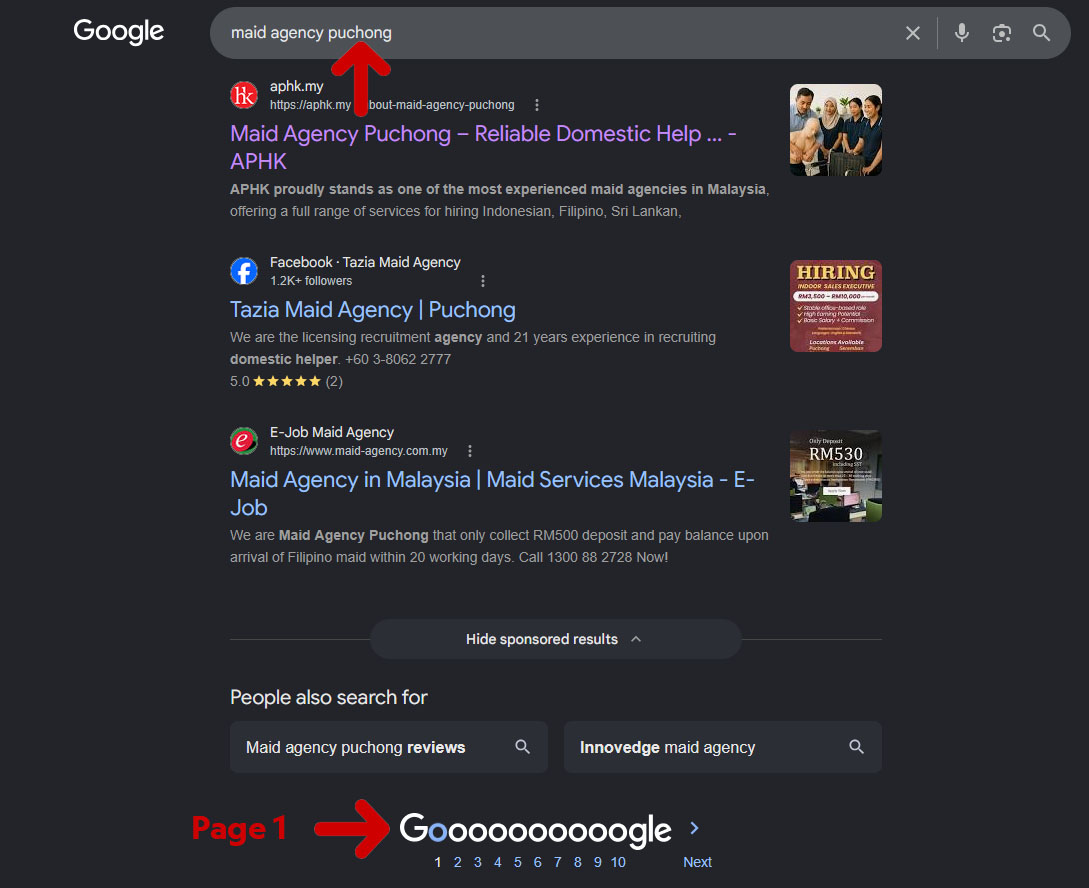
Within 3 months, APHK started appearing in searches, moving into Page 1 Google rankings for competitive terms like maid agency puchong, and AI search engines began citing his articles directly. Here is the exact playbook we used to turn Hari’s website into an AI-ready lead engine.
Step 1: Lock In Your Brand Identity & Technical Foundation
AI search engines require clear, unambiguous signals about who you are before they will trust and cite your website.
- Unify Your Brand Name and URL : We transitioned Hari from his clunky old domain (domesticmaids.com.my) to a short domain (aphk.my) that matched his actual company branding across all platforms.
- Harden Web Security and Speed : We placed the new site into our secure VPS hosting environment, hardened security, and built a clean site using WordPress, Elementor Pro, and the Astra theme.
- Verify Local Entity Signals : We configured on-site SEO using Rank Math, submitted the sitemap via Google Search Console, connected Google Analytics, and verified his Google Business Profile with a one-take video submission.
💡 Dr. Web’s Diagnostic Note:
AI search tools do not guess. If your social media says one name, your domain says another, and your Google profile has conflicting details, AI systems will mark your site as low-confidence and ignore you.
Step 2: Write Single-Problem Articles for Answer Engine Optimization (AEO)
Traditional SEO wrote long, fluffy articles packed with keywords. AI search engines look for concise, authoritative answers to specific real-world problems.
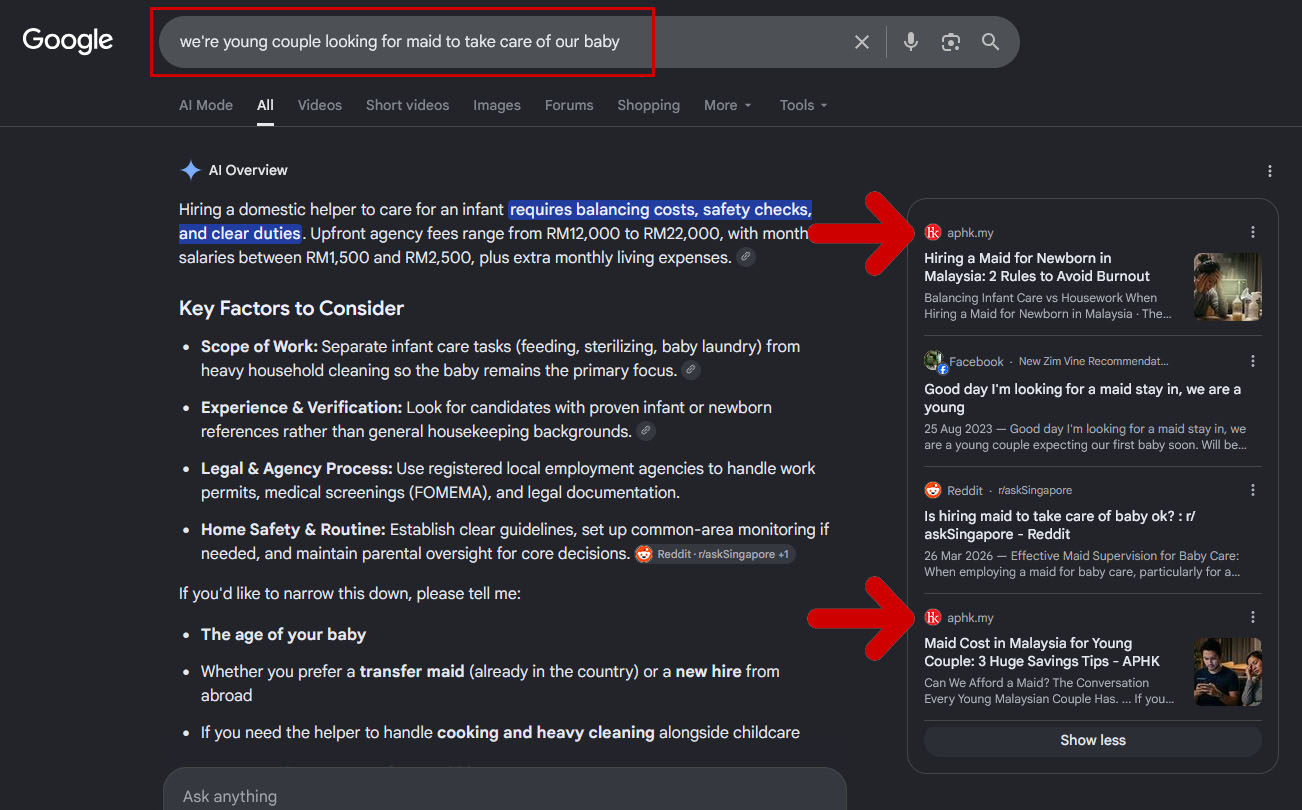
- Target Specific Client Pain Points : Instead of generic posts, we created a focused article series targeting specific problems like young couples who needed a live-in maid to take care of a newborn baby.
- Follow the “One Problem, One Solution” Rule : Each article clearly states one specific family problem, followed immediately by practical, step-by-step solutions.
- Optimize for Direct AI Citation : We used AI tools like Gemini during content consulting to structure posts with clear answers and bullet points. As a result, AI engines were able to digest and cite those articles directly soon after indexing.
Step 3: Stack Multi-Channel Organic Signals
An AI-ready website does not rely on text alone. AI engines validate your site’s reputation by cross-referencing user reviews and video content across the web.
- Drive Authentic Google Reviews : We worked with Hari to actively collect Google reviews, building localized trust and social proof.
- Repurpose Written Guides into Video : We took the exact topics from his top-performing articles and turned them into straightforward video guides on a new YouTube channel.
- Pivot from Paid Ads to Organic Equity : Instead of burning RM4,500 every month on short-lived TikTok ads, Hari now focuses on building permanent organic assets through articles and videos that continuously attract leads.
Frequently Asked Questions (FAQ)
-
Q1: What is the difference between traditional SEO and an AI-Ready Website?
Web Doc Answer : Traditional SEO focuses on keyword density and backlinks to rank on Google search result pages. An AI-Ready website uses clean entity structure, schema code, and direct answer formatting so AI models (like ChatGPT, Gemini, and Google AI Overviews) can read, trust, and quote your content directly in search responses.
-
Q2: How long does it take for an AI-ready site to rank and get cited?
Web Doc Answer : In Hari's case with APHK, keyword rankings like maid agency puchong moved into the top 20 and reached Page 1 within 3 months. AI search engines began citing his niche articles shortly after indexing. This varies from case to case.
-
Q3: Do I still need paid social media ads if I build an AI-ready website?
Web Doc Answer : Not necessarily. While paid ads give temporary visibility that stops the moment you stop paying, an AI-ready website builds permanent organic assets. Repurposing your core website guides into search-optimized YouTube videos and Google Business Profile updates creates a sustainable, multi-channel lead pipeline without burning monthly ad spend.
Protect Your Website Backend
Don't let silent technical debt, outdated plugins, or malware ruin yr online reputation. Keep yr digital front door locked, fast, and secure 24/7.
Secure Your Business Email
Ensure yr everyday client proposals and invoices land safely in main inboxes—never in spam folders—with clean enterprise cloud infrastructure like M365.